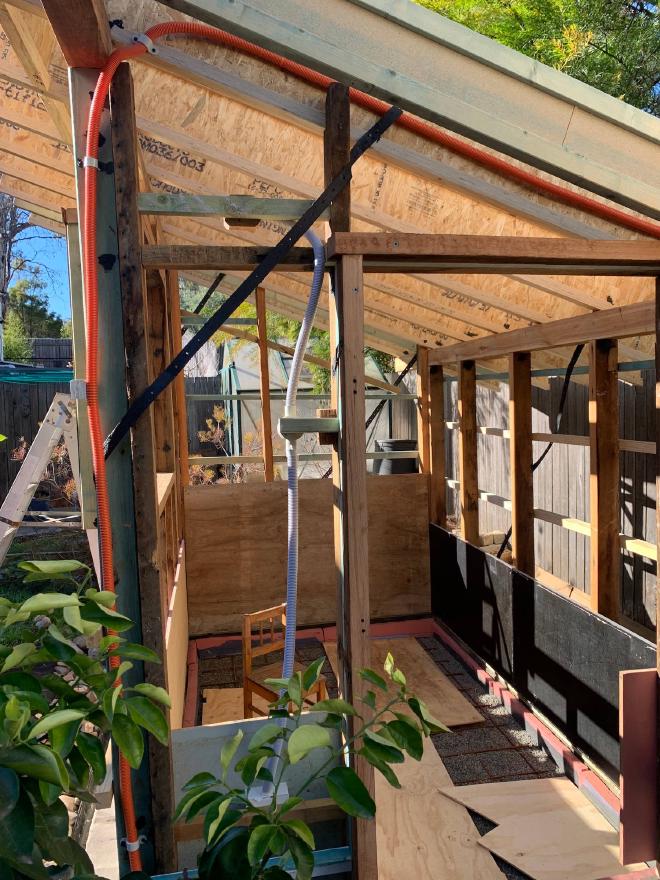
Framing

Table of Contents
Lime Sublime - This article is part of a series.
Wall frames #
As mentioned on the Design page, I salvaged some old hardwood studs from a house demolition on my street and had the idea of featuring them on the internal side of my walls. They looked rough but were transformed by a pass through a table saw (cut to a standard 90mm width).
I didn’t have enough hardwood for the bottom plates or hidden end studs so these were the usual H2-treated (blue) pine.
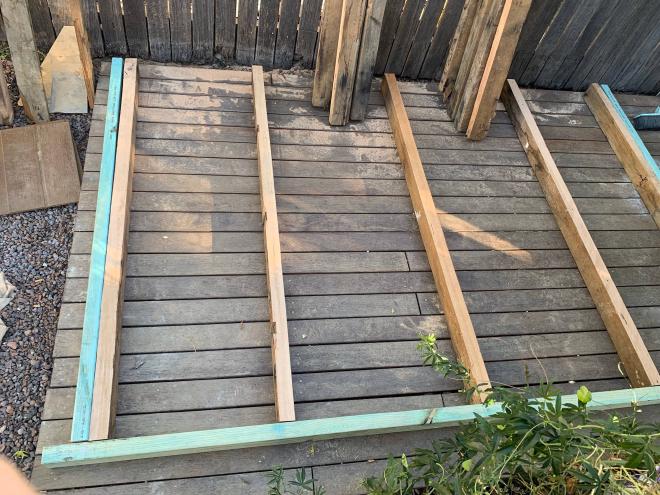
My wall top plates were to be 100x100mm cypress pine beams. But they had not been delivered in time for the wall framing, so I assembled the frames without them. To keep the studs straight, I fastened plywood to the inside face.
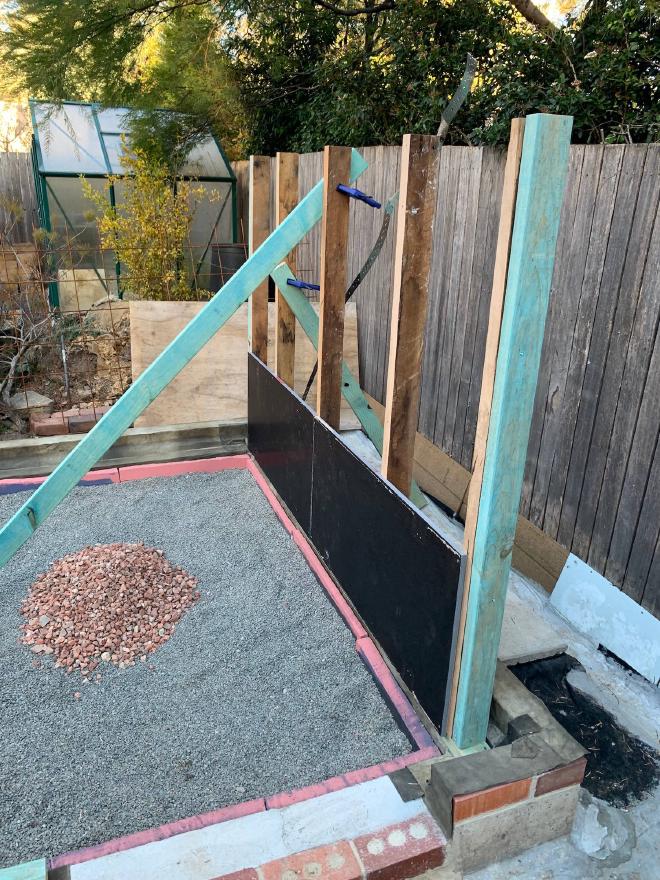
In fact, this plywood serves as one side of the shuttering (formwork) for the hempcrete. The shuttering will come off after the hempcrete has been placed. Hempcrete once set will brace the wall. Even so, I added steel strap bracing, mainly just to tie down the roof.
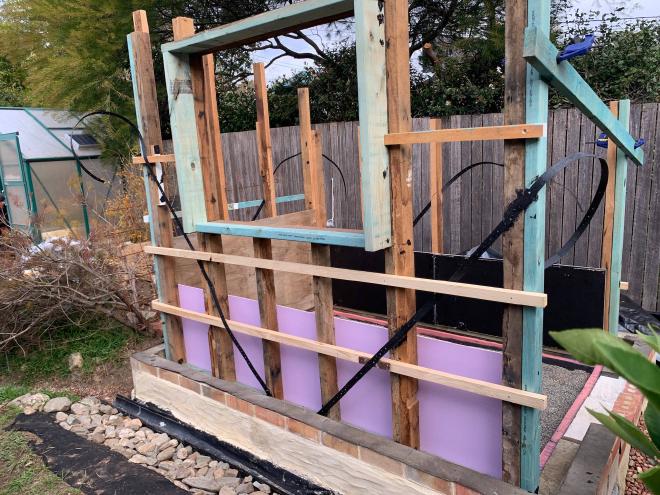
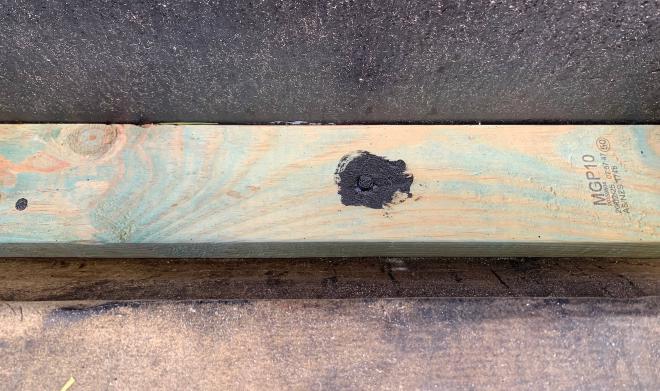
Steel exposed to the lime in hempcrete needs a protective coating or it will rust. That includes the strap brace, and nail and screw heads. I used a bitumen waterproofing paint.
Roof frame #
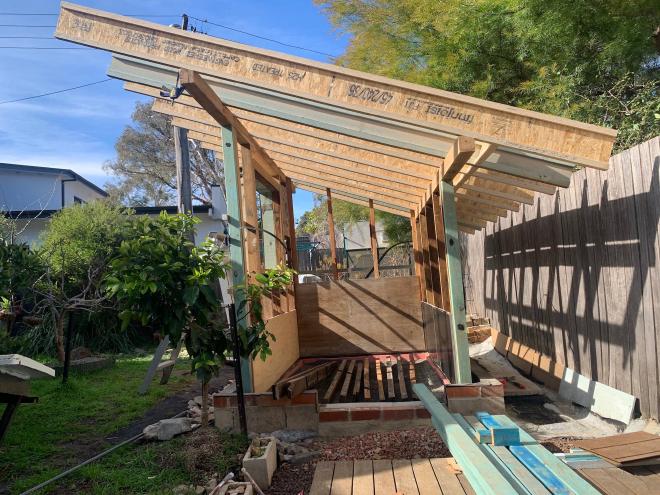
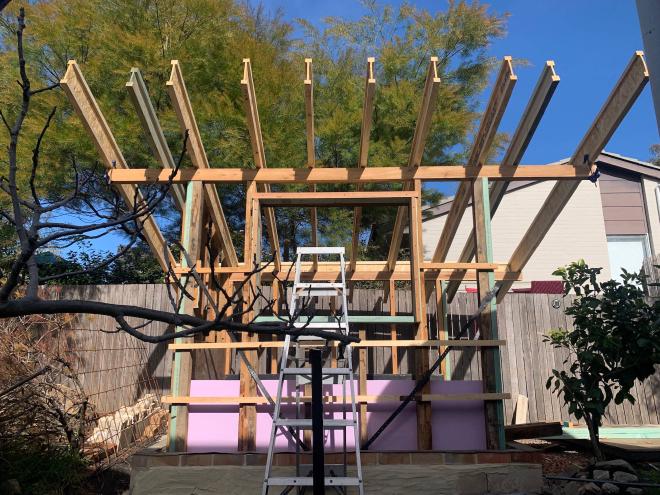
The roof frame is simple: rafters at about 20º spanning the front and back walls.
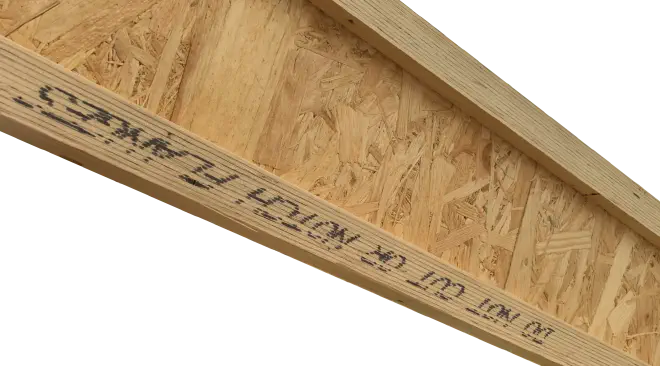
There’s just one complication. My rafters are I-joists, which means for structural reasons they can’t be notched out (with a “birdsmouth”) to sit on the wall frame. So instead, I had to notch out the wall top plates. I did this with a simple jig for a circular saw, and chisel.


The I-joists could then sit in these notches.
Electricals #
When I built my workshop I basically just ran an extension cord. This time I wanted to do it better with an actual power outlet, light fittings, and light switch. Inside hempcrete walls, electrical wires should be placed inside conduit (buffering the thermal insulation). And power outlets need a box behind them for wiring.