Roofing

Table of Contents
Lime Sublime - This article is part of a series.
Wrap #
A weather-resistant barrier is essential to protect the hempcrete. Any water that (inevitably) gets under the roofing will drain down this membrane. I used ProctorWrap HTS because I had it left over from my workshop build. This roof is a single pitch at 20º, which makes drainage simple and easy.
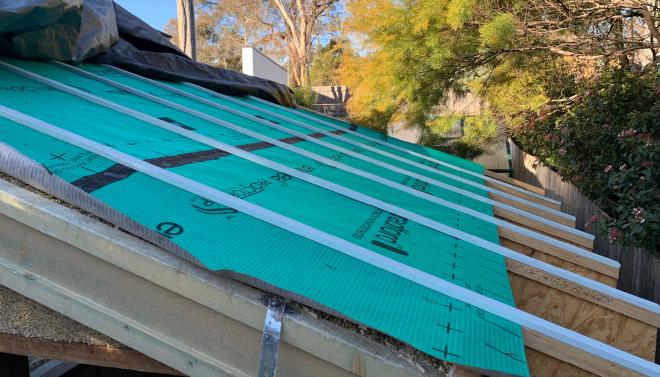
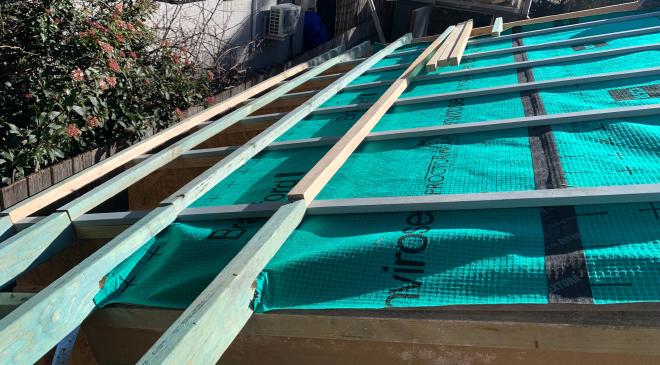
Drainage battens run along the rafters, creating a continuous pathway 18mm high for drainage and for vapour diffusion. Tiling battens run horizontally on top of the drainage battens.
Tiles #
I had built slate and metal roofs before and this time I wanted to try tiles. I found some terracotta tiles on Facebook Marketplace for $2 each. After scrubbing them up (and cleaning off the wasps, spiders, leafmould etc) they looked good as new. The way they slot together is satisfying.
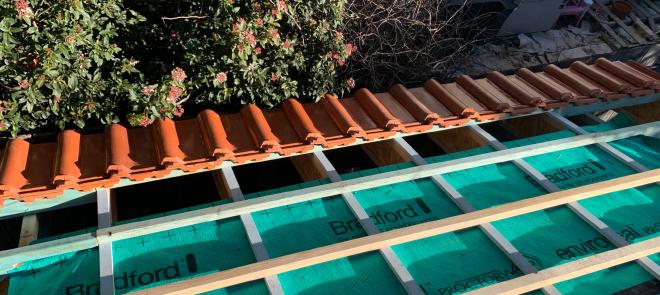
I found out later that this particular profile, “Swiss”, was discontinued for a reason. It channels water into a hidden drainage path down the roof and that makes any leaks hard to track down. I’m ok with it in this case because (a) my pitch is decent at 20º, (b) it’s a pretty short 3.6m run down the roof.
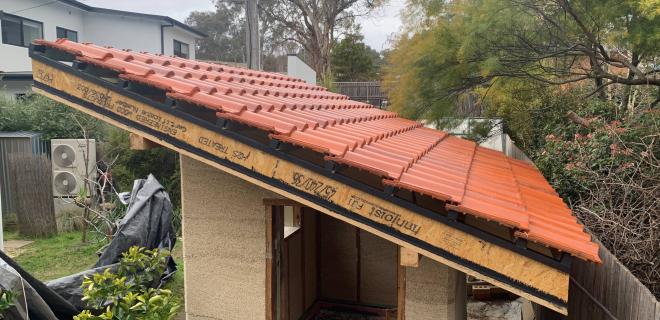
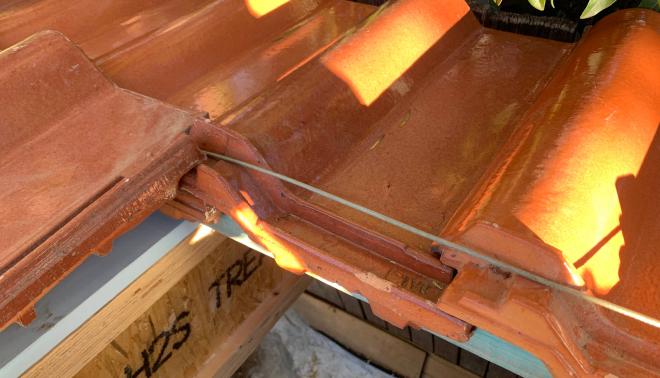
I was surprised to find that the tiles don’t have fixing holes. I think you are supposed to use special clips. Well they are heavy so I can’t imagine them blowing off, particularly in this sheltered location. But just in case, I ran a wire rope over.
Fascia #
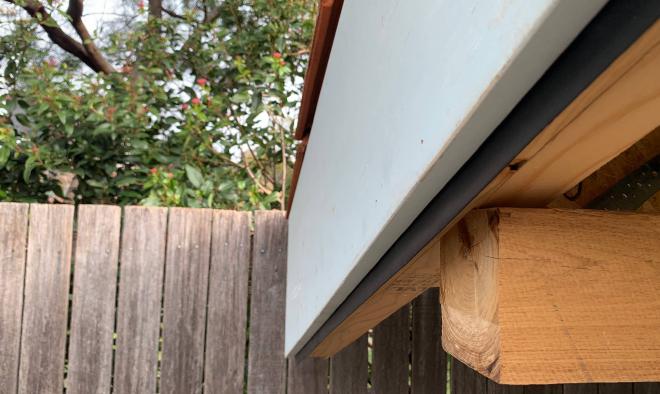
I used a treated pine board around all four sides of the roof. First, to stop water running back across the eaves, it is important to break the flow with a drip edge flashing. A simple strip of rubber does the job.
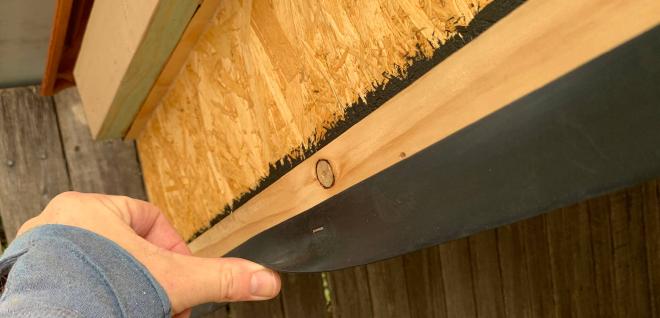
I fastened the fascia board with a brad nailer.
Tile bedding #
Tiles along the edge of the roof are usually sealed with a cement mortar. This is partly just cosmetic but helps to secure the tiles against wind uplift too. I mixed white cement, white brickies sand, and iron oxide cement pigment.
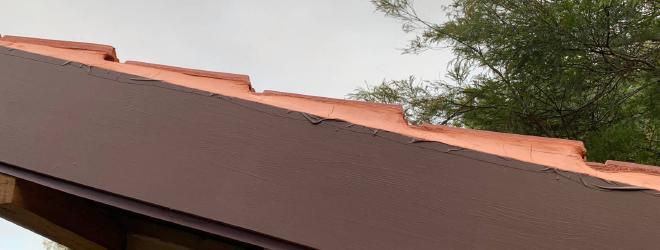
(Also I painted the fascia.)
Soffit #
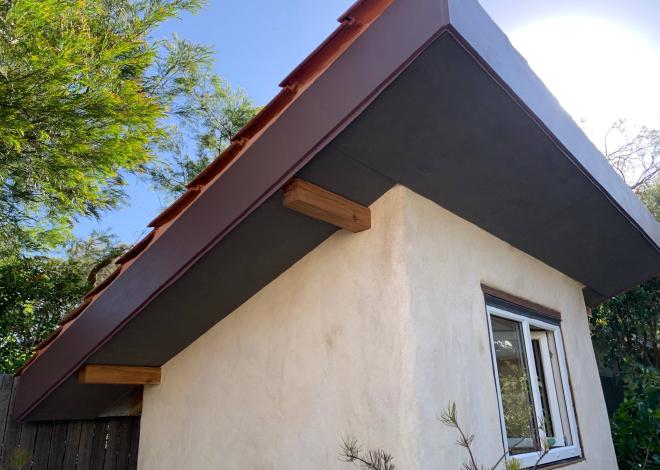
The last piece of the puzzle is the soffit, ie eave lining. I cut fibre cement sheets to size and painted them with a mineral silicate paint. (My original plan was to paint the exterior walls with it, but decided not to.) This paint does not form a film on the surface, but instead petrifies and becomes one with the substrate. The result is a matte finish.